
World Wheat Trade - Import Perspective
- Monday April 4, 2005
This analysis featured in the March 21, 2005 issue of the HGCA's MI Prospects, Volume 7, Number 19
Key points
- Some 60% of wheat trade destined for North Africa, Middle East and/or Eastern Asia
- Rising ocean freight costs could regionalise international wheat market
- China and India consume 40% of total global consumption
- Globally only 15% of wheat production is consumed by livestock
World wheat trade is normally considered in the context of exports, as supply is normally more volatile than usage and the more usual driver of price. This article considers, however, world wheat trade from an import and, thus, usage perspective.
About 75% world wheat trade is sourced from the four traditional exporting countries and the European Union (EU). Non-traditional exporters of Eastern Europe have on average been contributing a further 15% in recent years. The 11 largest importing countries, however, only account for half of net imports (Graph 1).
continue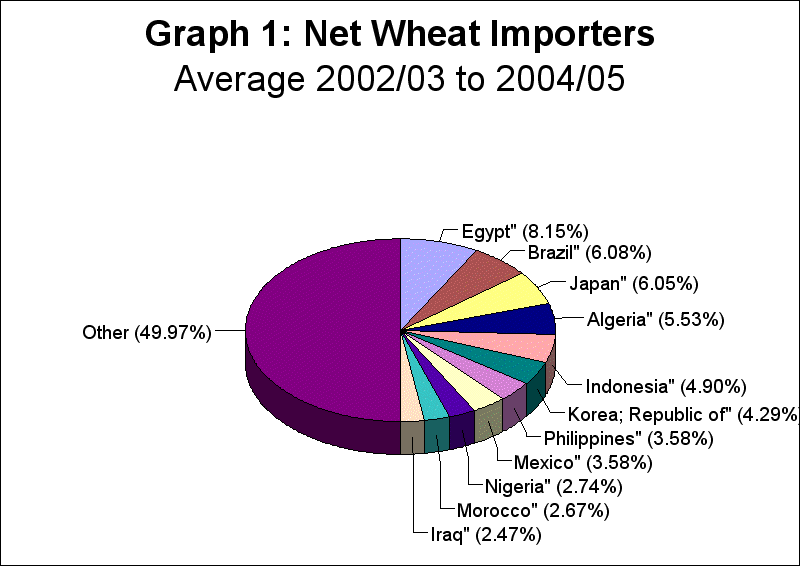 Source: USDA
Regional trade considerations
Given the large areas of arable land and relatively small consuming population in the US, Canada, Australia and Argentina, it is easy to see why these major exporters have substantial exportable supplies. Importers, however, are more difficult to assess in this way.
Some wheat importing countries like Egypt have got a limited arable area and a relatively large population. Some like Brazil, the second largest importer, and importing EU member states, have reliable neighbours to import from. Others like Japan and Algeria have either well-developed economies or are relatively well endowed with resources and can import rather than grow their own food. Another and smaller group of importers are seemingly dependent on continuing international aid.
Much of the import trade is concentrated in two relatively well defined regions (Graph 2). More than 60% of net wheat trade is destined for either North Africa, the Middle East or Eastern Asia. This has important implications for the type and source of wheat used. The recent increases in ocean freight rates suggest that geography will be an increasingly important determinant of trade flows.
continue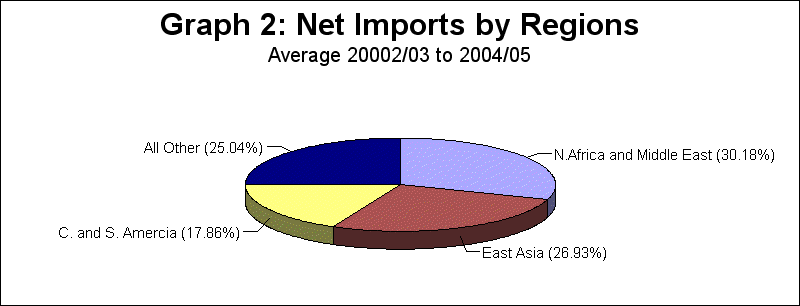 Source: USDA
Much of the wheat imported into North Africa and the Middle East is used for pan as opposed to oven baked breads. This bread is only partially leaven and less demanding of quality than wheats typically used for bread making in the western world. North Africa is also a significant market for durum wheat where it is used to produce cous-cous rather than pasta.
In Eastern Asia wheat is imported for consumption as noodles and steam breads. For this usage white wheats are preferred as whiteness is a quality characteristic of noodles and a wheat with a white epiderm will allow a better flour yield. In other markets the redness of wheat is often regarded as a quality characteristic as it is associated with protein content, valued in flour used for oven baking. Soft white winter wheat produced in the US Pacific North West and Australian hard white wheats are naturally suited to markets in Eastern Asia. Canada has more recently developed spring white wheats for this market.
As ocean freight traditionally represented a modest portion of the cost of imported wheat, the major exporters have tended to compete with one another in all markets. But with ocean freight costs having risen significantly in recent years, the international wheat market may become increasingly regionalised if current freight rates are sustained. Australia and Canada will tend to hold a relative advantage in Pacific markets out of its west coast ports, while Argentina, the EU and the US, out of its Gulf ports, will hold an advantage in Atlantic markets. Non-traditional exporters will provide competition particularly in the Mediterranean when they have wheat to ship from Black Sea ports.
Long term trends with China and India
In the longer term world wheat imports continue to grow at a modest pace reflecting probably population and income growth (Graph 3). Occasionally this trend is broken as poor crops in deficit producing regions necessitate larger than usual imports and exporters have had supplies to accommodate such chance business.
continue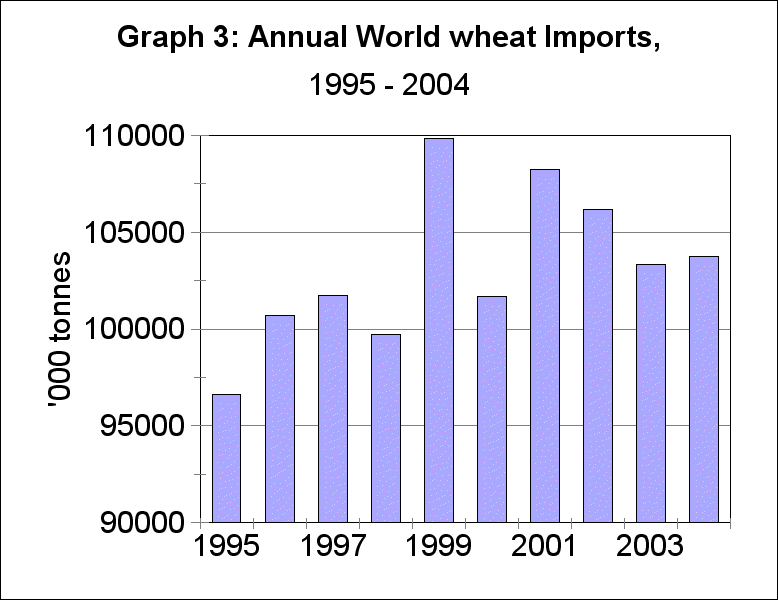 Source: USDA
While in absolute terms wheat imports have increased, relative to production and consumption they have declined. This is reflected in the success of the two largest wheat consumers, China and India, in achieving and exceeding self-sufficiency in recent years. Together they consume about 170M tonnes, or close to 30% of total global consumption.
These two economies are also growing rapidly, implying that increasing per capita income will result in above average growth in consumption. It also implies that increased industrialisation may put less emphasis on food production. Gradual consumption trends of this nature often go unnoticed. However, India and China remain important to the world wheat market as small changes may produce perceptible consequences, either on the supply or the demand side.
Feed wheat trade
Globally not much more than 15% of wheat production is consumed by livestock. Wheat used as feed is generally limited to areas too cool or too dry to grow maize or where it fails to make the quality requirements for intended food usage markets. In the EU however 40% of wheat is fed to livestock, accounting for over half of the world’s feed wheat consumption (Graph 4). This partly reflects the EU system of import protection which excludes lower priced world maize supplies. Outside of the EU livestock consumption of wheat is very limited, some 8% in the US, 6% in China and less than 1% in India.
continue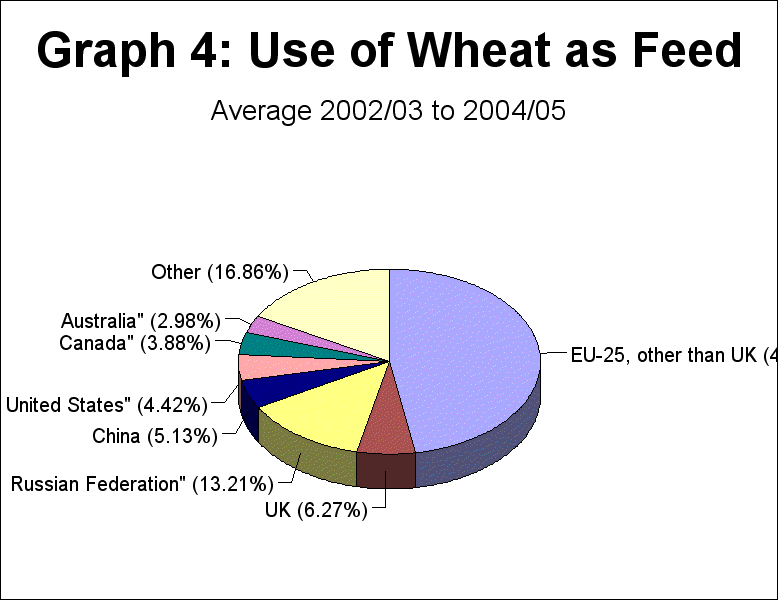 Source: USDA
In the UK, wheat exports have traditionally been dominated by feed quality to protected EU market. However the proportion of milling types has now reached around 80%, allowing an increased proportion of milling exports when the weather and crop quality permits.
David Walker 01603 705 153
top of page